
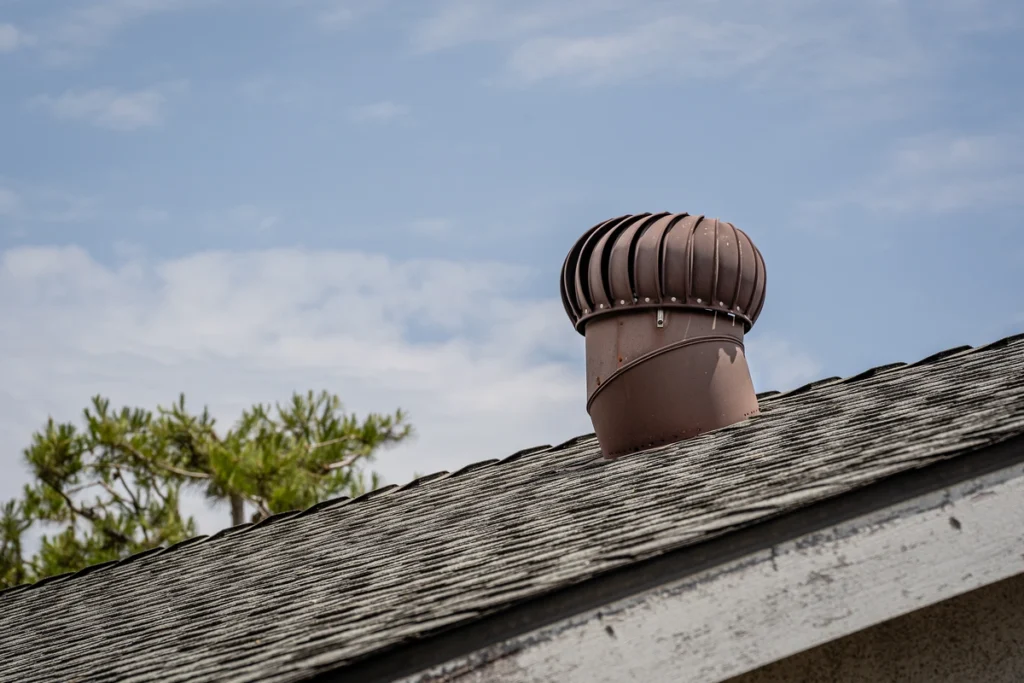
When homeowners think about saving money on utility bills, they usually focus on energy-efficient appliances, programmable thermostats, or advanced window designs. While these are all excellent starting points, one of the most significant factors in residential energy efficiency sits completely out of sight above the ceiling. Your roof and attic ventilation system plays a quiet but defining role in regulating your home internal climate.
Without proper ventilation, your attic behaves like an oversized greenhouse, trapping immense heat in the summer and destructive moisture in the winter. This lack of balance directly forces your HVAC equipment to work much harder, driving up your monthly energy costs and shortening the lifespan of your roof structure. Understanding how air moves through your roof can help you take control of your indoor comfort and protect your household budget.
The Physics of Proper Attic Ventilation
An effective roof ventilation system operates on basic thermodynamic principles. The primary objective is to maintain an indoor attic temperature that closely mirrors the ambient temperature outside. This is achieved by creating a continuous, balanced cycle of natural air movement.
Air circulation inside an attic requires two distinct components working together smoothly:
-
Intake Vents: These vents are located at the lower edge of the roofline, typically under the eaves or within the soffits. They allow cool, fresh outdoor air to enter the attic space.
-
Exhaust Vents: These vents are positioned at the highest point of the roofline, usually along the ridge peak. They allow stagnant, warm air to exit the home.
As solar radiation hits the roof shingles, it heats up the air trapped inside the attic. Because hot air naturally rises, it migrates toward the peak of the roof and escapes through the exhaust vents. This exit creates a natural vacuum effect, drawing fresh, cooler air into the bottom of the attic through the intake vents. This process is completely passive and does not require electricity to function properly, relying entirely on natural convection and wind pressure.
How Poor Ventilation Drives Up Summer Energy Bills
During a typical summer day, solar heat beats down continuously on your roof. If your attic lacks sufficient intake and exhaust pathways, this intense heat becomes trapped. On a ninety-degree day outside, an unventilated attic can easily reach temperatures exceeding one hundred and forty degrees.
This concentrated thermal mass acts like a giant radiator sitting directly above your living space. The heat eventually migrates downward, penetrating through attic floor insulation and warming the ceilings of your bedrooms and hallways. As a direct result, your air conditioning system faces a relentless battle to keep up with the descending heat.
The system must run for significantly longer cycles to maintain your desired thermostat setting. This increased runtime leads directly to higher electricity consumption and a noticeable spike in your summer energy bill. Furthermore, running an air conditioner continuously causes premature wear and tear on components like compressor motors and fans, increasing the risk of an expensive mechanical breakdown when you need cooling the most.
The Hidden Winter Threat to Moisture and Money
While the financial impact of a hot attic is obvious during the summer, a poorly ventilated roof causes equally severe financial damage during the winter months. Winter energy efficiency issues are tied to internal moisture and humidity levels.
Everyday household activities like cooking, showering, washing dishes, and breathing release substantial amounts of water vapor into the air. This warm moisture naturally migrates upward through the drywall and ceilings into the attic. If the attic has functional ventilation, this moisture is swept out of the house before it can cause trouble.
However, in a sealed or poorly ventilated attic, the warm moisture encounters the freezing underside of the roof decking. When the warm, moist air meets the cold wood surfaces, condensation forms. Over a long winter, this condensation dampens your fiberglass or cellulose attic insulation.
Wet insulation quickly loses its ability to resist heat transfer. As the insulation becomes saturated, its thermal resistance drops dramatically, allowing valuable heat from your furnace to escape through the roof. To compensate for this rapid heat loss, your heating system must consume far more natural gas or electricity to keep your home warm, driving your winter utility bills higher.
Protecting Your Roof Shingles from Extrusion
Beyond the monthly utility expenses, inadequate airflow dramatically shortens the physical lifespan of your roofing materials, leading to early capital replacement costs. Shingles are designed to withstand external elements, but they are highly vulnerable to extreme heat coming from underneath them.
When an attic bakes in trapped heat, the wood decking beneath the shingles becomes superheated. This intense heat cooks the asphalt shingles from the inside out. The heat causes the shingles to prematurely age, dry out, lose their protective mineral granules, and turn brittle.
You may notice your shingles curling at the edges, cracking, or blistering. A roof that should have lasted twenty-five years can completely degrade in less than fifteen years due to poor airflow. Replacing a residential roof is a massive financial burden that can easily be avoided by ensuring your attic can breathe correctly.
Balancing Intake and Exhaust for Maximum Efficiency
Achieving an optimal ventilation system requires strict adherence to a balanced ratio of intake to exhaust. A common mistake made during home remodeling is adding more exhaust vents without expanding the intake capacity.
If your roof has plenty of ridge vents but the soffit intakes are blocked by insulation or are non-existent, the system cannot function as intended. The escaping air at the ridge peak will struggle to find a replacement source. In desperation, the vacuum effect will pull air upward from your heated or cooled living spaces through recessed lighting fixtures, attic hatches, and wall cavities.
This means your ventilation system will actively steal conditioned air that you have already paid to heat or cool, further inflating your monthly energy bills. A professional roofing contractor can calculate the correct net free ventilating area needed for your square footage, ensuring that the volume of incoming air perfectly matches the volume of exiting air.
Frequently Asked Questions
What is the ideal ratio for calculating roof ventilation space?
The general building standard for residential roof ventilation is the 1 to 150 rule. This standard dictates that for every one hundred and fifty square feet of attic floor space, you need one square foot of net free ventilating area. If your home has a vapor barrier installed on the warm side of the ceiling, this requirement can often be reduced to one square foot of ventilation for every three hundred square feet of attic space.
Can I mix different types of exhaust vents on the same roof?
It is highly recommended that you avoid mixing different styles of exhaust vents, such as combining a ridge vent with a motorized attic fan or traditional box vents. Doing so disrupts the uniform airflow pattern inside the attic. The stronger or higher vent can inadvertently draw air from the adjacent exhaust vent rather than pulling it from the lower soffit intakes, creating short-circuits in the circulation loop.
How do I check if my soffit intake vents are blocked?
You can perform a quick visual inspection by entering your attic during the daytime with a flashlight. Look toward the narrow edges of the roof where the rafters meet the floor. You should be able to see clear points of natural light filtering in from the outside soffits. If you see fiberglass insulation batts packed tightly into those corners, your intake airflow is blocked, and you need to install plastic insulation baffles to restore the airway.
Do motorized solar attic fans save more money than passive vents?
While motorized solar fans do pull air out of an attic quickly, they are rarely more cost-effective than a properly designed passive ventilation system. Passive ridge and soffit systems operate entirely for free without mechanical parts that can wear out. Motorized fans can sometimes create a negative pressure zone that pulls air out of your air-conditioned living spaces if your intake venting is even slightly inadequate.
What are ice dams and how do they relate to roof ventilation?
Ice dams form when heat escaping from an unventilated attic melts the snow on the upper sections of a roof. The melted water runs down to the colder roof edge or eave, where it freezes again into a thick ridge of ice. This dam traps subsequent water runoff, forcing it to back up under the shingles and leak into your ceilings. Proper ventilation keeps the entire roof surface at a uniform temperature, preventing the melting cycle entirely.
Does attic insulation replace the need for ventilation?
No, insulation and ventilation are separate systems that must work in tandem. Insulation acts as a blanket that slows down the transfer of heat between your living space and the attic. Ventilation manages the air quality and temperature of the attic itself once heat manages to cross that boundary. You need thick insulation to keep heat in your rooms, and strong ventilation to clear moisture and heat from the attic.